
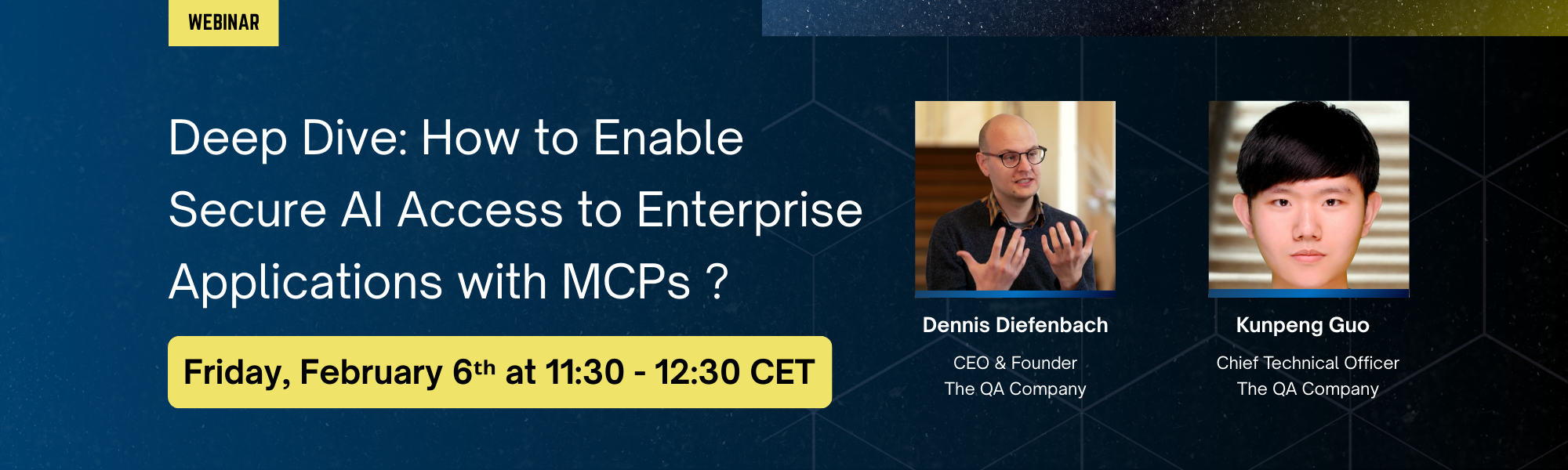
Deep Dive: How to Enable Secure AI Access to Enterprise Applications with MCPS ?
Organizations are increasingly adopting AI, but integration quickly becomes a challenge as tools, models, and data sources multiply. MCP (Model Context Protocol) introduces a standardized way for AI systems to interact with enterprise tools and data. By replacing fragmented, custom integrations with a shared protocol, MCP creates a stable foundation for building, scaling, and maintaining AI use cases over time. This approach helps organizations deploy AI more consistently while keeping control over architecture, evolution, and governance.
In this webinar, we will explore how MCP helps organizations standardize AI integration and scale AI use cases effectively.
Session agenda
- Understanding MCP and its role in modern AI architectures
- Standardising AI integration across models, tools, and systems
- Key use-cases enabled by MCPs
- Impact on organizations and AI delivery at scale
- Live demonstration of MCP with QAnswer
- Security and governance considerations
Deep Dive: Standardising AI Integration with MCP
Organizations are increasingly adopting AI, but integration quickly becomes a challenge as tools, models, and data sources multiply. MCP (Model Context Protocol) introduces a standardized way for AI systems to interact with enterprise tools and data. By replacing fragmented, custom integrations with a shared protocol, MCP creates a stable foundation for building, scaling, and maintaining AI use cases over time. This approach helps organizations deploy AI more consistently while keeping control over architecture, evolution, and governance.
In this webinar, we will explore how MCP helps organizations standardize AI integration and scale AI use cases effectively.
Session agenda
- Understanding MCP and its role in modern AI architectures
- Standardising AI integration across models, tools, and systems
- Key use cases enabled by MCPI
- Impact on organizations and AI delivery at scale
- Live demonstration of MCP with QAnswerSecurity and governance considerations


